

Carbon farming in India now has a draft route to carbon credits. Healthy soil holds more carbon, and better farming can help it hold even more. Bureau of Energy Efficiency (BEE) has uploaded a draft methodology for improving soil organic carbon (SOC), referred to as the Improved Agricultural Land Management IALM methodology (BM AGXX.XXX). This blog explains how the framework works, which land qualifies, how the baseline is calculated and what you will need to monitor.

Healthy soil holds more carbon, and better farming can help it hold even more.
Why does soil carbon matter for carbon farming in India?
Soil organic carbon is the carbon stored in the organic matter of soil. Practices such as keeping the soil covered, disturbing it less and returning organic matter can raise that stock over time, which also supports soil health and productivity. The methodology gives a way to measure that increase and turn it into credits under the CCTS Offset Mechanism.
The key idea is flexibility. Rather than locking in one practice, the framework is not limited to a specific activity and lets projects apply the most current and best-fit systems for their land.
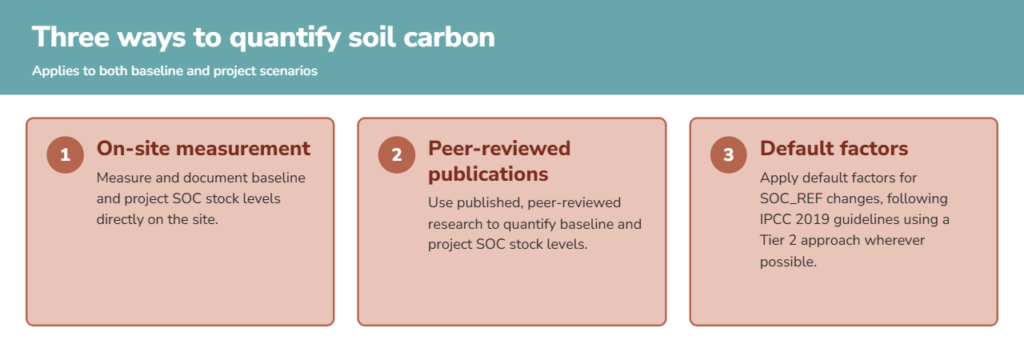
Three ways to quantify soil carbon:
The framework offers three approaches for quantifying SOC improvements in both the baseline and project scenarios:
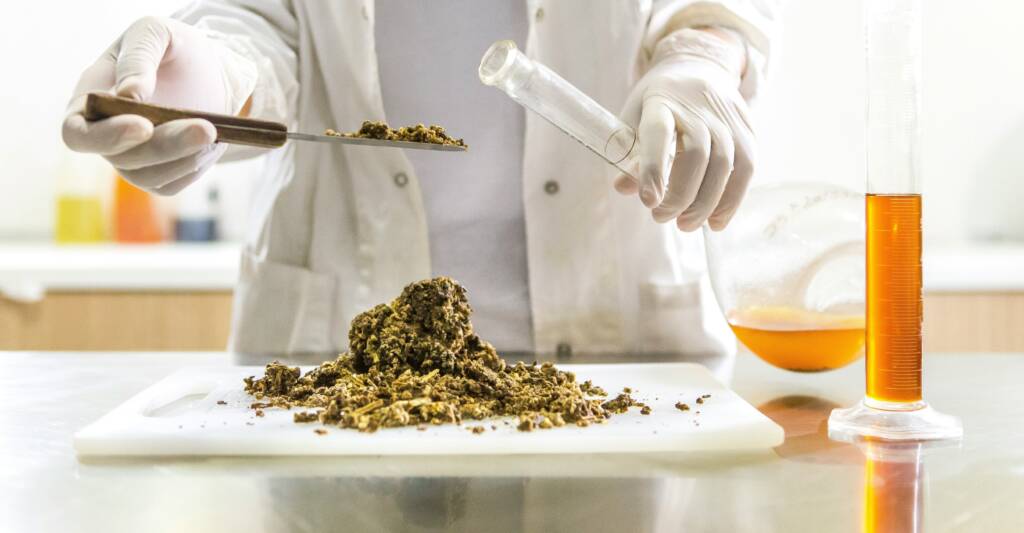
Soil sampling is the backbone of measuring SOC change.
Project documentation will reference the IALM methodology together with the applicable activity tools.
IALM Framework and activity tools:
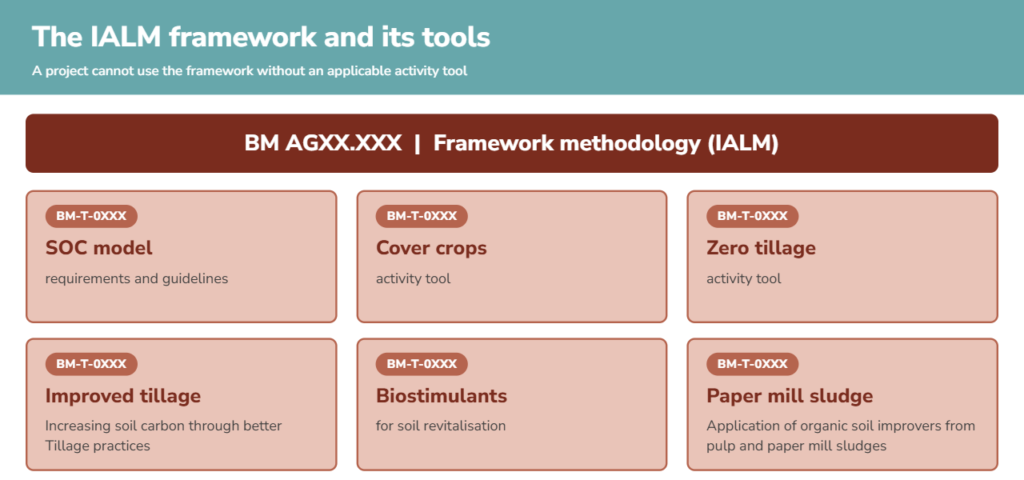
Think of the framework as the rulebook and the activity tool as the specific game you are playing. BE has listed six tools, all with placeholder codes (BM-T-0XXX):
Is your land eligible for the carbon credits?
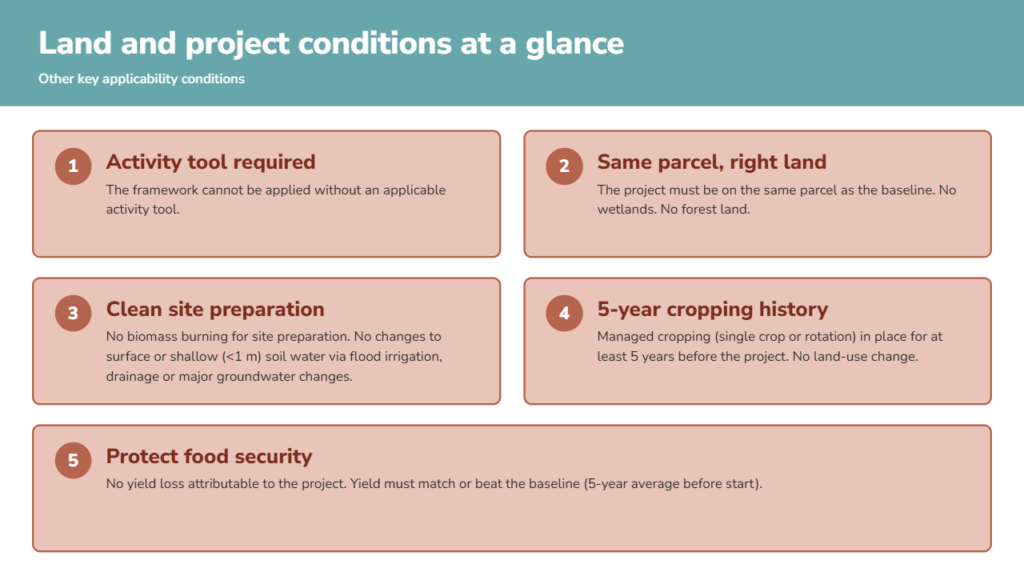
Before proceeding with a carbon credit project, it is essential to evaluate whether the land meets the applicable eligibility criteria. Key considerations include land-use history, site preparation practices, and the maintenance of crop yields to ensure that the proposed activity aligns with the framework’s requirements.
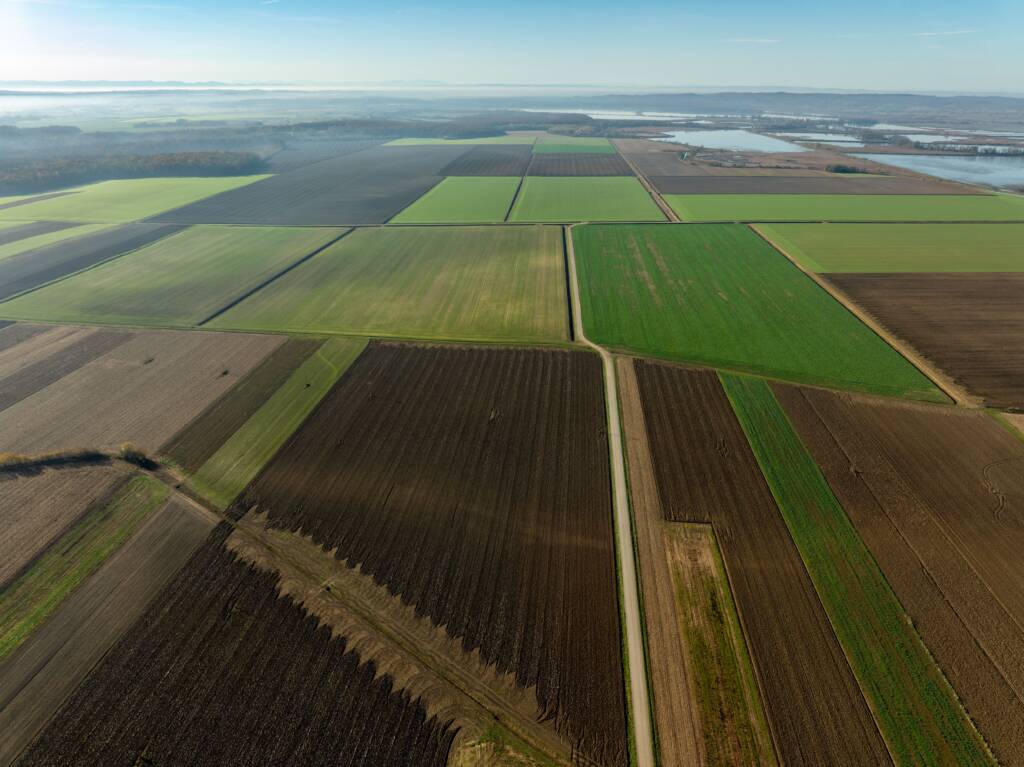
Eligibility starts with managed cropland and a documented cropping history.
The following checklist highlights five critical conditions to assess.
How is the baseline calculated?
Fields are rarely uniform. The methodology therefore divides the eligible project area into strata, zones with similar conditions, and adds up the carbon in each.
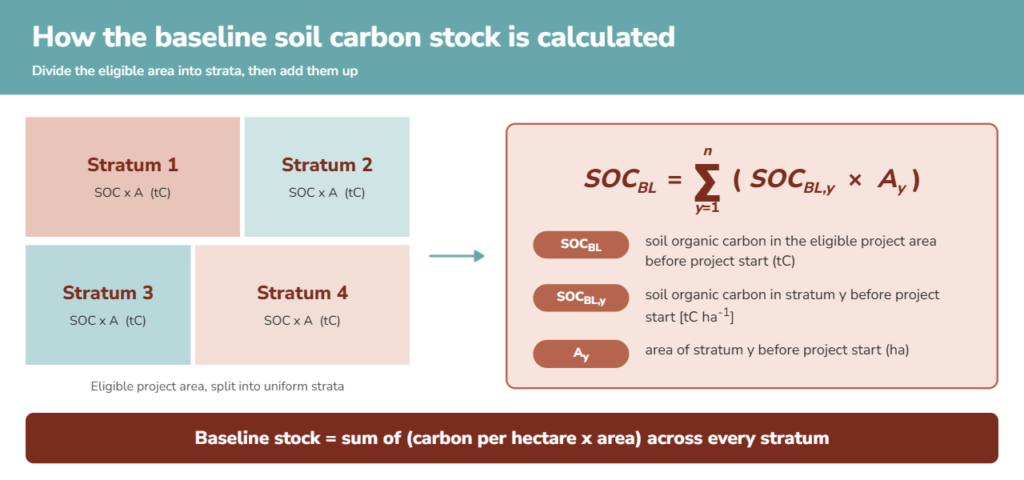
Parameters used for the baseline are the SOC in the eligible area before project start (tC), the SOC in each stratum before project start (tC per ha-1) and the area of each stratum before project start (ha).
What will you need to monitor?
| Parameter | Description | Unit |
| A | Total project area | ha |
| Ay | Area per stratum y | ha |
| AQPR,ET,a | Agrochemical quantity by emitter type applied in year a | Kg |
| CYt | Average annual crop yield per ha in the project area (5-year average) | Kg/ha |
| SOCt,y | Soil organic carbon density at equilibrium per stratum y | tC/ha |
| SOCREF,y | Soil organic carbon reference density (under natural vegetation) at equilibrium per stratum y | tC/ha |
| FEPR,a | N fertilizer input under the project scenario in year a | Kg |
| FULPR,MT,a | Fossil fuel consumed recorded by vehicle and fuel type in year a | litres |
| EUWPR,SE,a | Electricity consumed by source in year a | kWh |
Beyond soil carbon itself, the list tracks the inputs a farm uses: nitrogen fertiliser, agrochemicals, fossil fuel by vehicle and fuel type, and electricity by source. Crop yield is recorded as a five-year average so you can show that food production holds up.
Who should consider carbon farming in India under the offset mechanism?
• Farmer producer organisations, cooperatives and agribusinesses with managed cropland and a documented five-year cropping history.
• Land managers ready to adopt cover crops, zero tillage or improved tillage.
• Companies working with biostimulants for soil revitalisation.
• Pulp and paper mills whose sludge can be turned into organic soil improvers.
A real-world example: Case study of Morocco
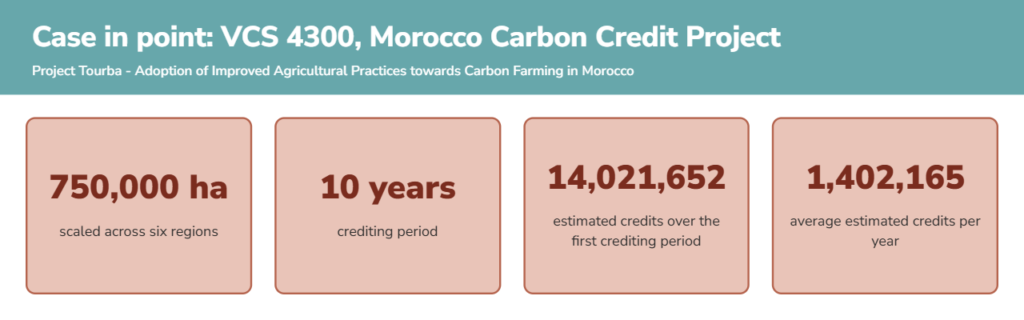
Case Study: Morocco Carbon Credit Project (VCS 4300)
- The project scales regenerative agriculture across 750,000 hectares in six regions through Sustainable Agricultural Land Management (SALM) practices, supporting Morocco’s zero-tillage goals. Under a 10-year crediting period it reports improved soil health, higher agricultural productivity, more diverse farmer incomes and stronger climate resilience.
- The project quotes about 14,021,652 estimated credits for the period, an average of roughly 1,402,165 per year. It is a reference case from another country, not a result under the Indian methodology.
The bottom line
The IALM framework helps land managers demonstrate where carbon is stored, how much has been sequestered, and that food production is protected. Assessing the five conditions, selecting the right activity tool, and planning soil measurement early are key to determining project viability.
What would it take to meet your Carbon Goals?
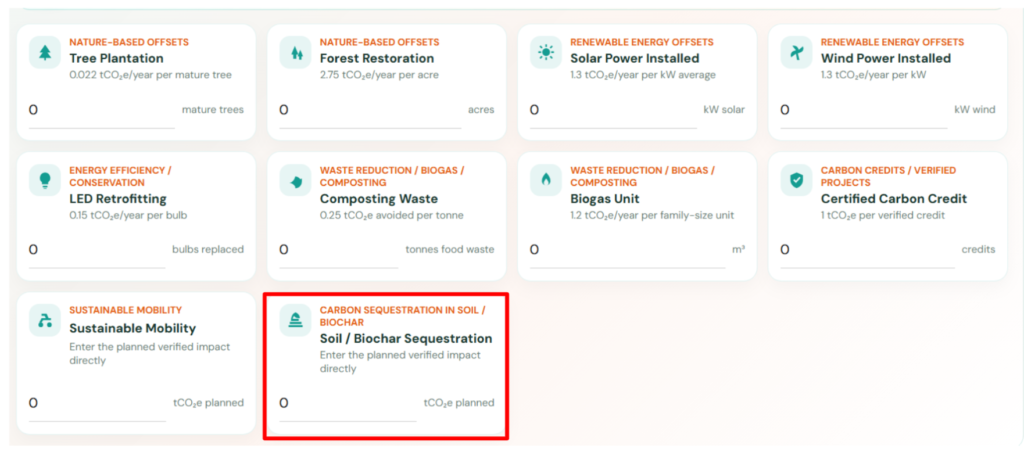
Explore soil sequestration as an offsetting strategy and estimate your offsetting requirements using our in-house carbon calculator with many other offsetting options available to explore.
Measure your emissions. Understand your opportunities. Explore the right carbon pathway.