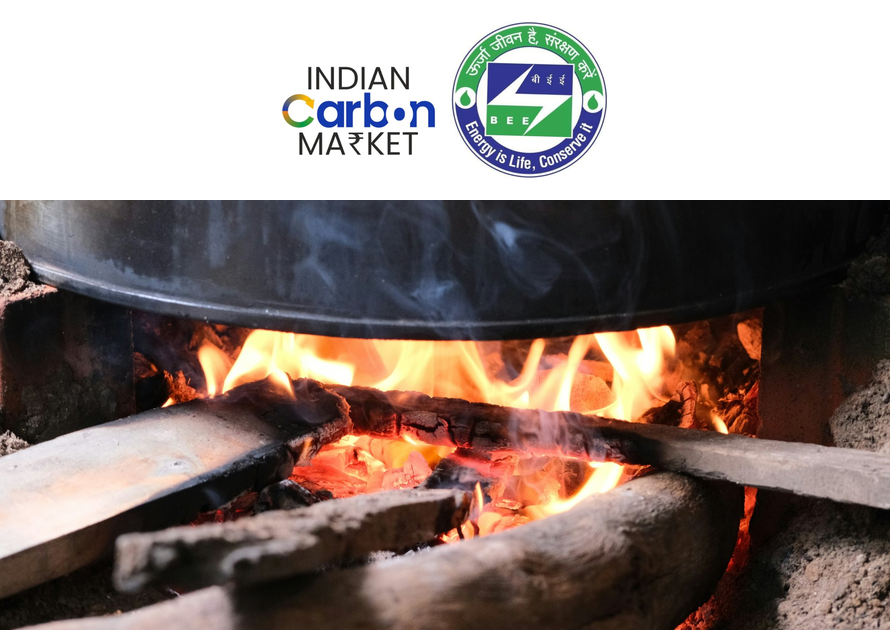

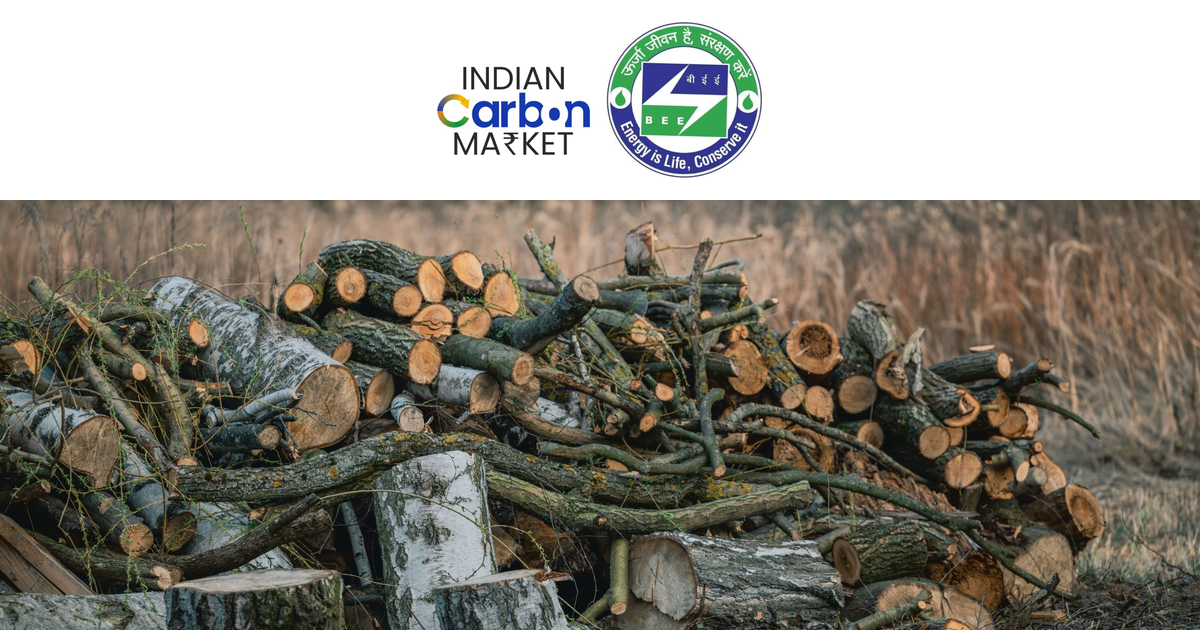
India’s carbon market is preparing to reward a better outcome for waste biomass. Every year, farms, forests, sawmills and treatment plants produce biomass that ends up burnt in the open or left to rot. India’s Carbon Credit Trading Scheme (CCTS) Offset Mechanism is preparing a route to reward a better outcome: converting that biomass into stable biochar. This blog unpacks the draft methodology BM AG04.XXX: Production and Use of Biochar, presented by the Bureau of Energy Efficiency (BEE).
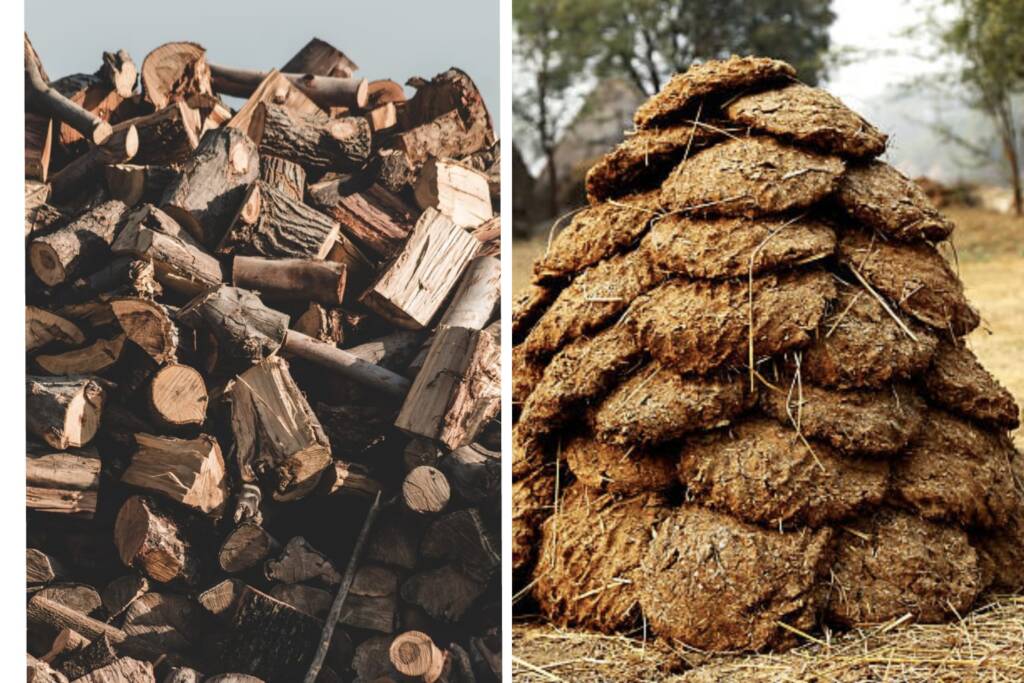
Wood and forestry residue : one of the many biomass feedstocks that can turn into biochar & Animal waste, such as dung cakes, is an eligible biomass stream
Why does Biochar earn carbon credits in the carbon market?
Biochar is a carbon-rich, charcoal-like solid made by carbonising biomass. When the same biomass is burnt in the open or breaks down without oxygen, its carbon returns to the air as carbon dioxide (CO₂), or as methane (CH₄) and nitrous oxide (N₂O). Turning it into biochar holds that carbon in a solid form instead, and puts it to work in soil, construction materials or other long-life uses.
That is why the methodology is classed as carbon dioxide removal (CDR): it supports the conversion of sustainable biomass into stable biochar, resulting in long-term storage of biogenic carbon and avoided emissions from decomposition.
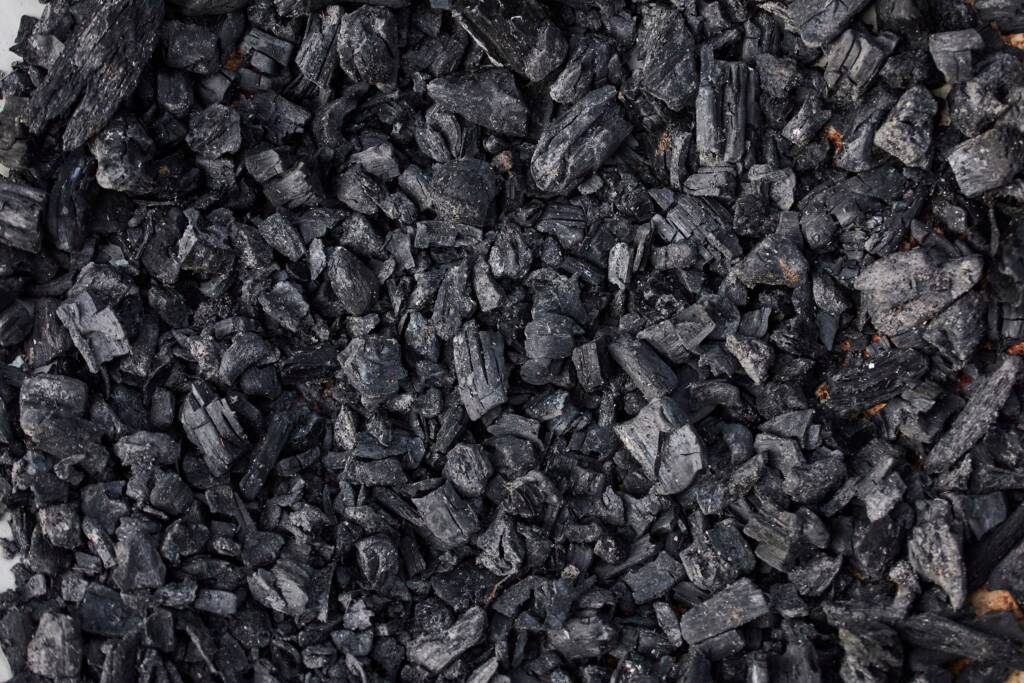
Biochar : carbon locked into a stable, solid form
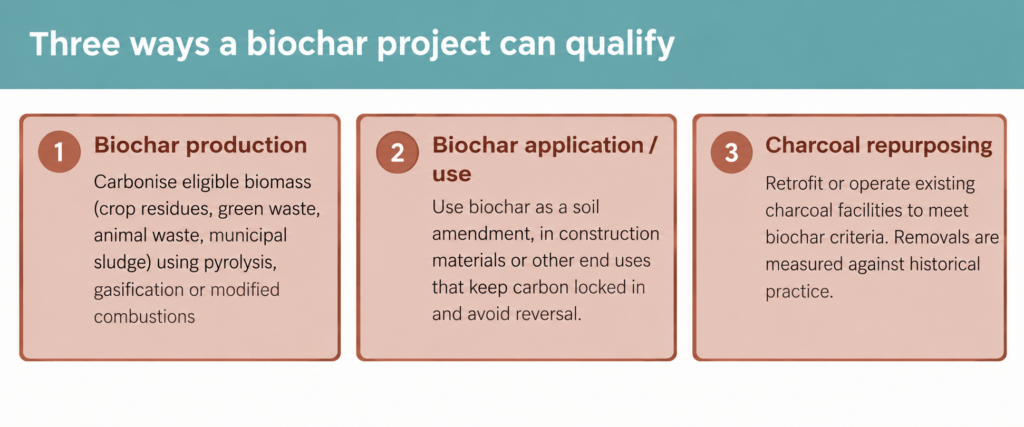
Three ways a project can qualify under CCTS India:
The BEE Methodology sets out three approaches. A biochar project activity may apply one of them:
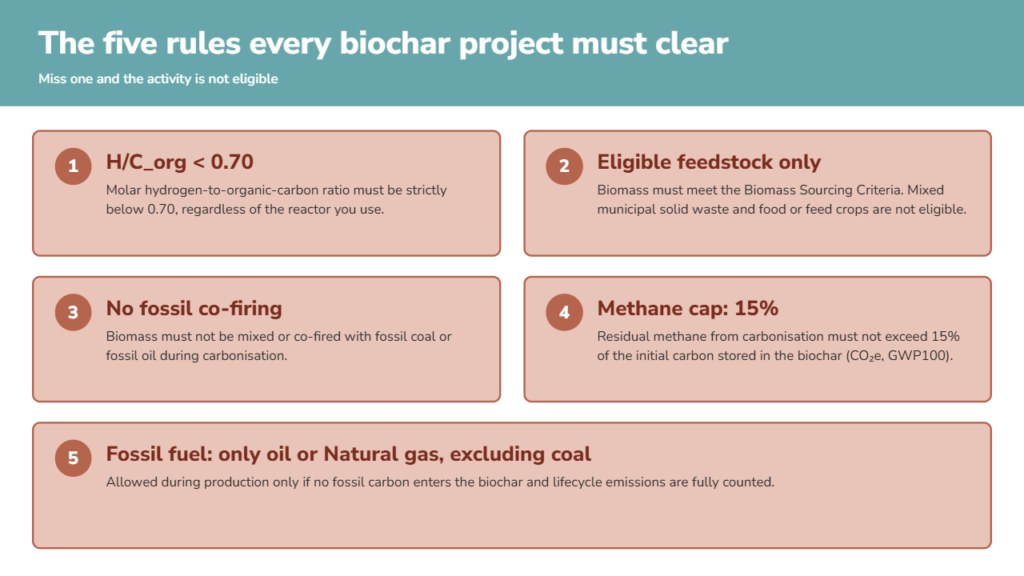
Five rules every biochar project must clear:
The baseline: what happens without the project?
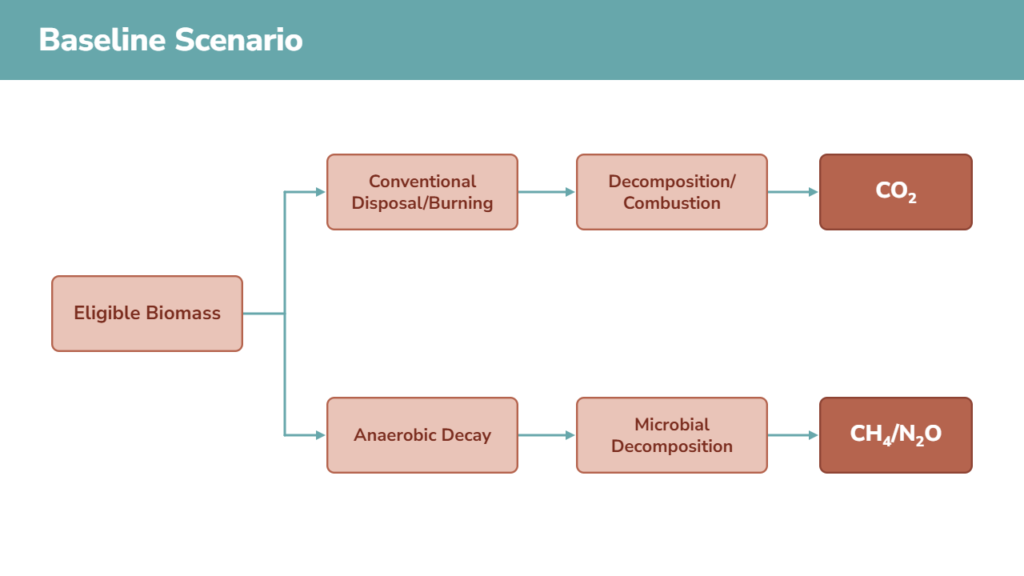
Credits are only issued for what the project changes. The baseline assumes eligible biomass is conventionally disposed of through open burning or unmanaged decomposition, causing CO₂ from combustion and CH₄/N₂O from anaerobic decay.
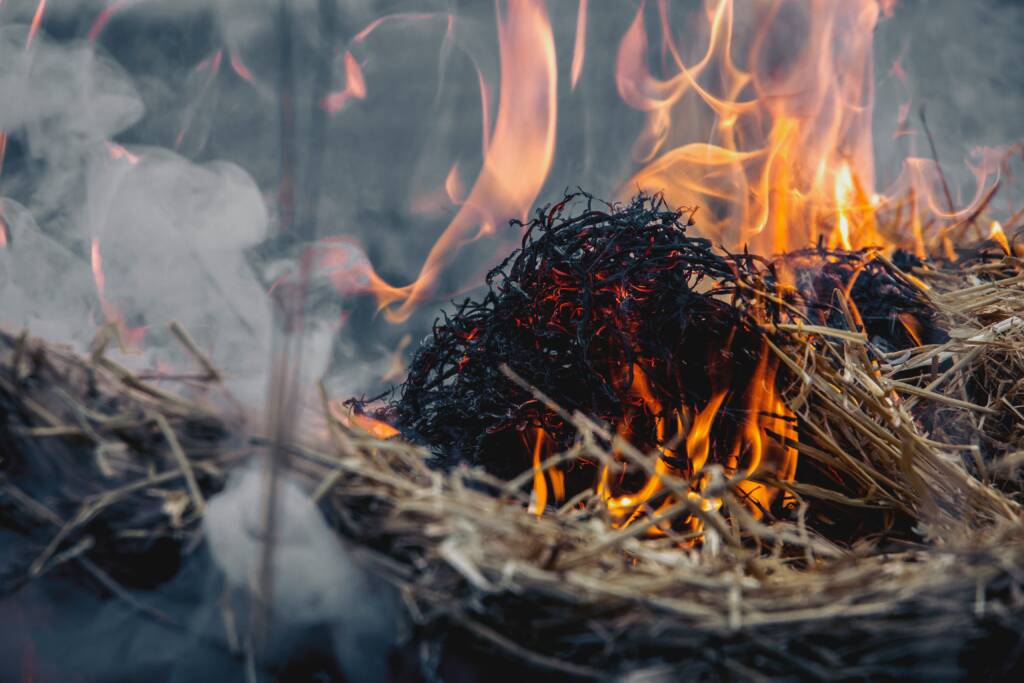
Baseline scenario : Open burning of crop residue releases CO2, CH4, N2O
Baseline Scenario:
How are project emissions counted?
Biochar is not free of emissions: sourcing, transporting, processing and using it, all take energy and materials. The methodology therefore calculates project emissions from operational and embodied lifecycle emissions, covering upstream and downstream activities.
Project Scenario:
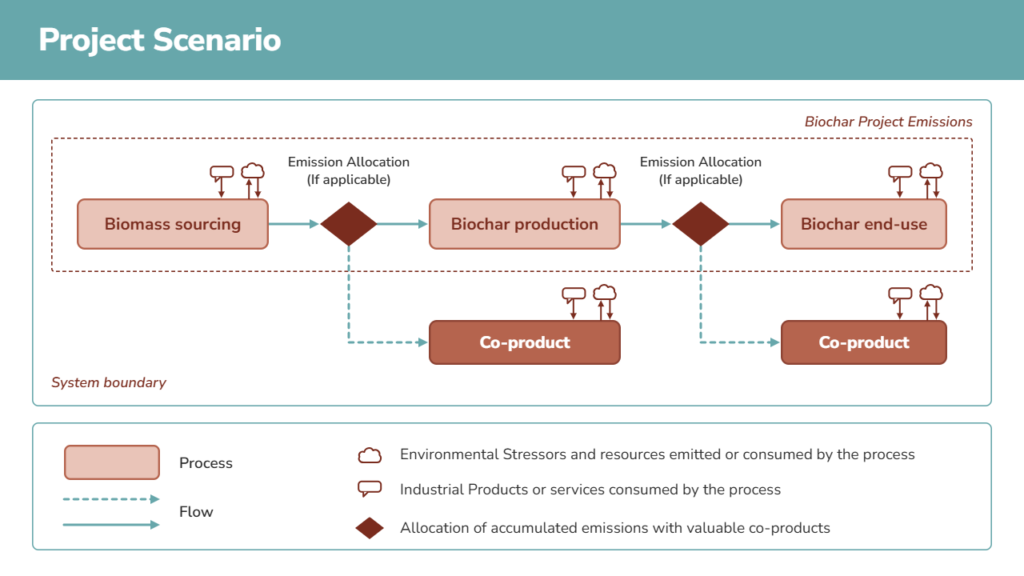
• Eops: lifecycle emissions of operating the project during the monitoring period, including materials and energy used.
• Eemb: The amortised share of embodied emissions from producing, using and disposing of infrastructure and equipment, plus direct land-use changes.
• Co-products: Where the supply chain creates other valuable products, accumulated emissions are allocated between them, and only the biochar share is counted against the project.
A real-world example:
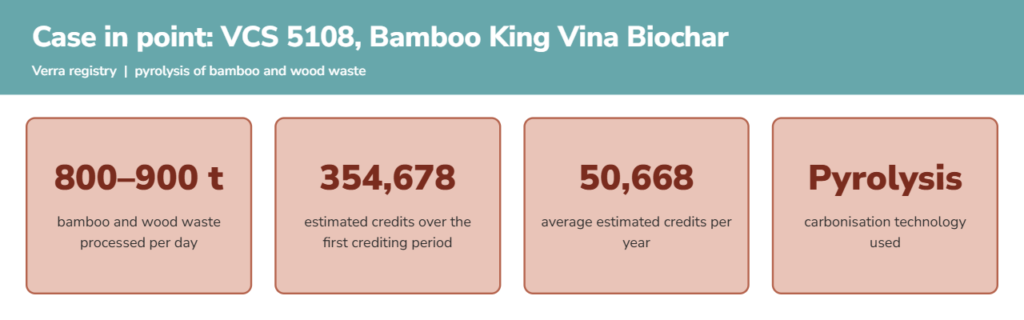
Case Study: Bamboo King Vina Biochar (VCS 5108)
- The project converts 800 to 900 tonnes of daily bamboo and wood waste from the company’s Vietnam facility into biochar using pyrolysis, aiming to cut greenhouse gas emissions while improving soil health, agricultural productivity, carbon sequestration and local livelihoods.
- This case study quotes about 354,678 estimated credits over the first crediting period, an average of roughly 50,668 per year. It is shown as a reference case, not as a result under the Indian methodology.
Who should look at Biochar as an option for carbon credits?
• Agricultural-residue processors and farmer producer groups with steady residue supply.
• Bamboo, wood and green-waste handlers.
• Animal-waste and municipal-sludge managers (note that mixed municipal solid waste is
not eligible).
• Existing charcoal producers able to retrofit to biochar criteria.
• Developers of new (greenfield) biochar facilities.
Key takeaways
- Biochar is a carbon removal route. Eligible biomass is converted into stable biochar, giving long-term storage of biogenic carbon and avoiding emissions from biomass decomposition.
- The methodology covers greenfield biochar production facilities and their use. A project applies one of three approaches: production, application, or charcoal repurposing.
- Five rules decide eligibility, including an H/C_org ratio below 0.70 and no co-firing with fossil coal or oil.
- Project emissions are counted across the whole lifecycle (Eproject = Eops + Eemb), with allocation where valuable co-products exist.
- This is a draft methodology, not a final one. Developers and verifiers must track later revisions.
What would it take to meet your Carbon Goals?
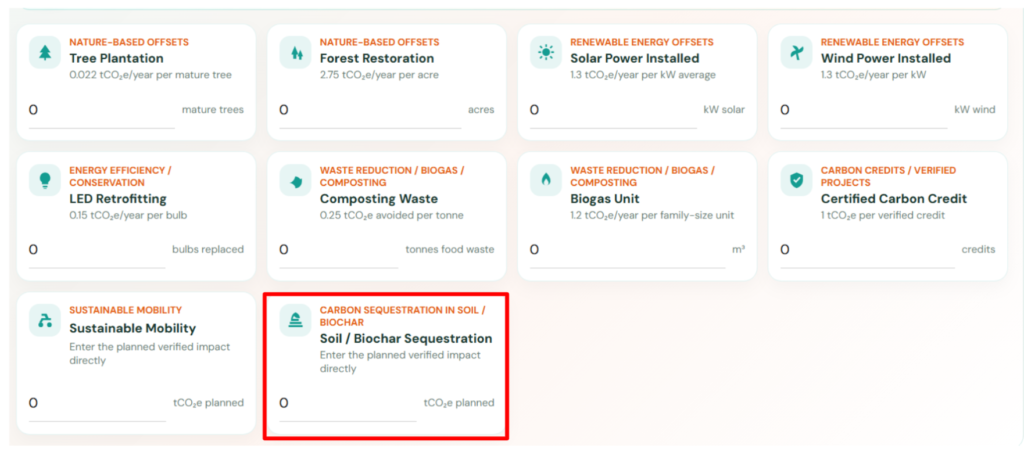
Explore soil / Biochar sequestration as an offsetting strategy and estimate your offsetting requirements using our in-house carbon calculator with many other offsetting options available to explore.
Measure your emissions. Understand your opportunities. Explore the right carbon pathway.