


Every shift from a private vehicle to mass transit cuts per-trip emissions.
The Bureau of Energy Efficiency (BEE), Ministry of Power has identified a methodology for MRTS carbon credits: it lets Mass Rapid Transit Systems (MRTS) earn credits in India’s carbon market by measuring those savings. Every commuter who leaves a car or motorcycle for a metro, rail line or dedicated bus corridor cuts per-trip emissions.
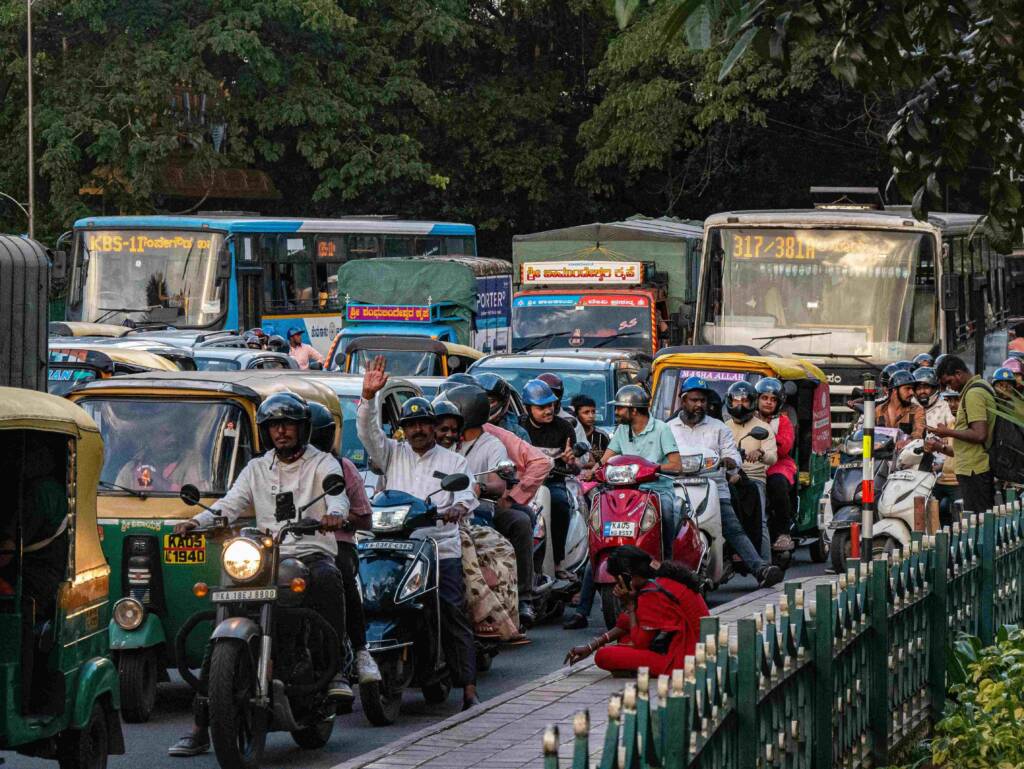
Mixed-traffic roads: the baseline that mass transit replaces.
At a glance
- Methodology: BM TR06.00X, Mass Rapid Transit (Transport sector)
- Adopted from: UNFCCC CDM methodology ACM0016, as valid from 31st May 2024
- How does it cut emissions: Improved energy efficiency by displacing more GHG-intensive modes with less intensive ones
- Who tracks the changes: The Non-obligated Entity (NoE) and the Accredited Carbon Verification Agency (ACVA) must note any later revisions to the CDM methodology
1. What kind of projects qualify for MRTS carbon credits?
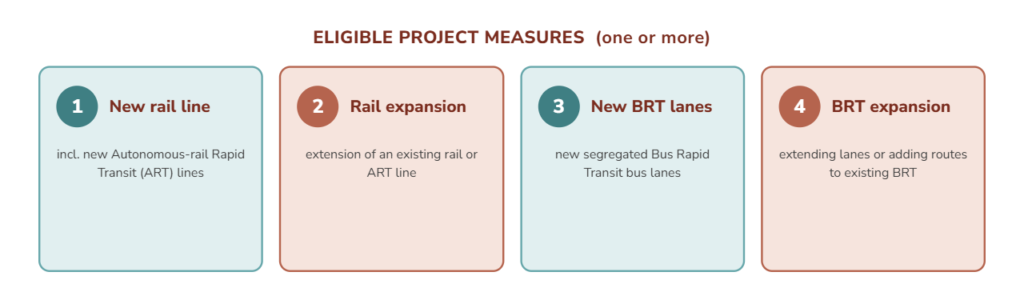
The methodology covers establishing and/or expanding rail-based or bus-based mass rapid transit in urban or suburban districts of a host city. The system, such as a segregated Bus Rapid Transit (BRT) lane or a rail line, must replace existing road-based routes operating in mixed traffic. A project can combine one or more of these measures:
2. Key Applicability Conditions:
Eligibility for MRTS carbon credits depends on the baseline being people continuing to use current modes of transport. Beyond that, there are specific conditions for BRTs, fuels and hydrogen, and a few exclusions.
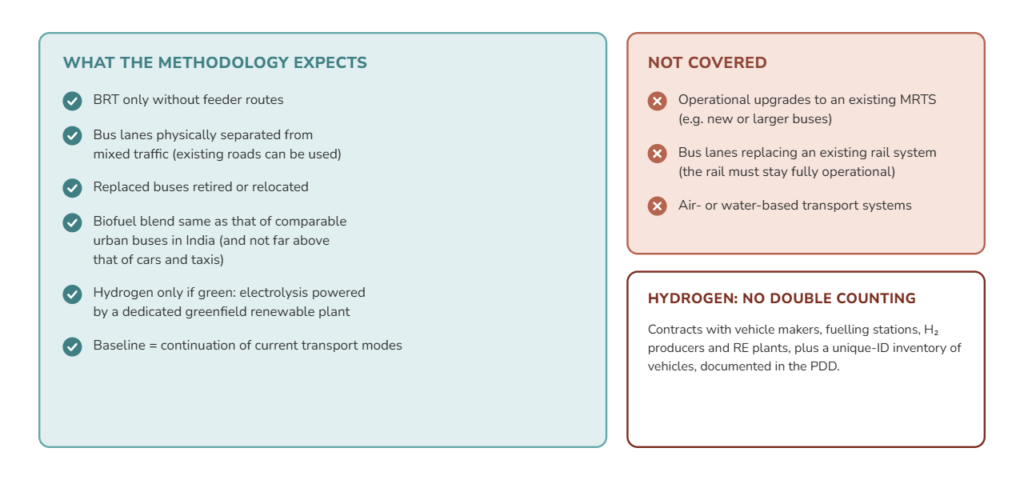
Fuels such as liquefied gaseous fuels, biofuel blends and electricity may be used in the baseline or project case. Where hydrogen vehicles are included, the Non-obligated Entity (NoE) must prove there is no double counting through contracts with each counterparty (vehicle makers, fuelling stations, hydrogen producers and renewable plants) and keep a full inventory of project vehicles with unique identification, documented in the project design document.
3. How are the emission savings calculated?
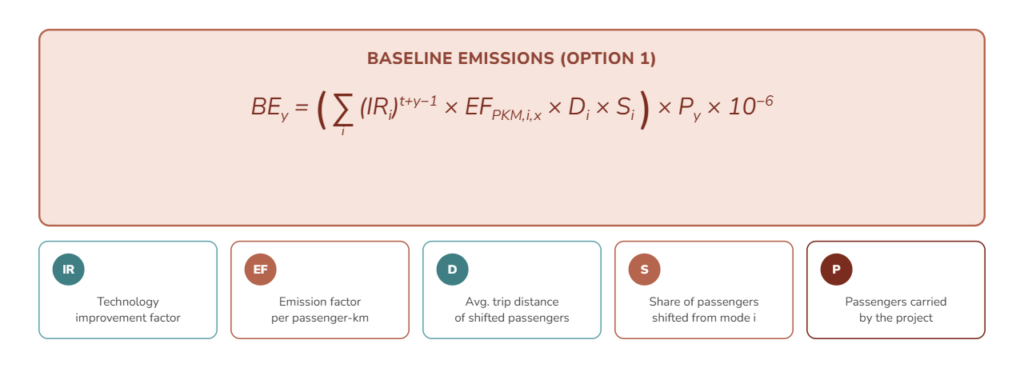
The logic behind MRTS carbon credits is simple: compare what passengers would have emitted on their old modes with what the new system, plus their journeys to and from it, actually emits.
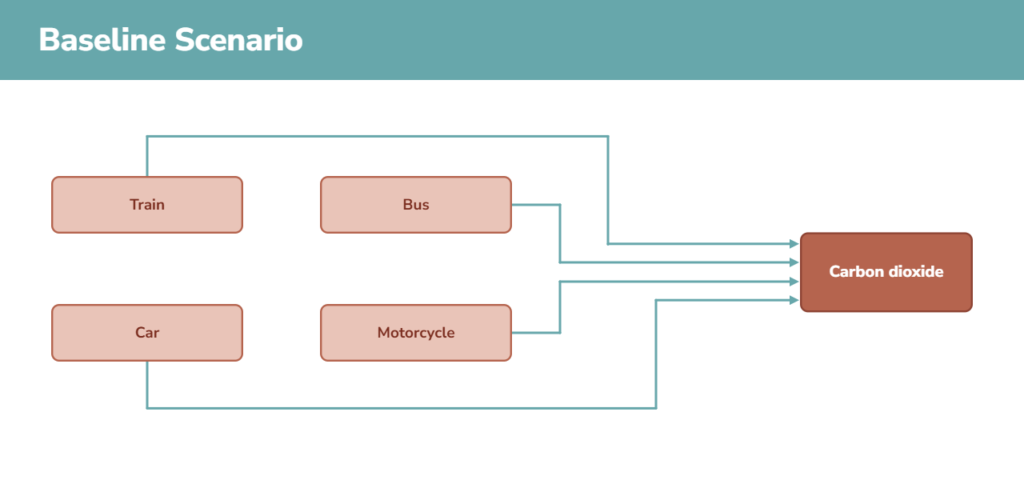
Baseline emissions
Baseline emissions are built from the passengers who shifted to the MRTS. The modes considered are passenger car (C), bus (B), motorcycle (M) and rail-based urban transit (R).
Project emissions
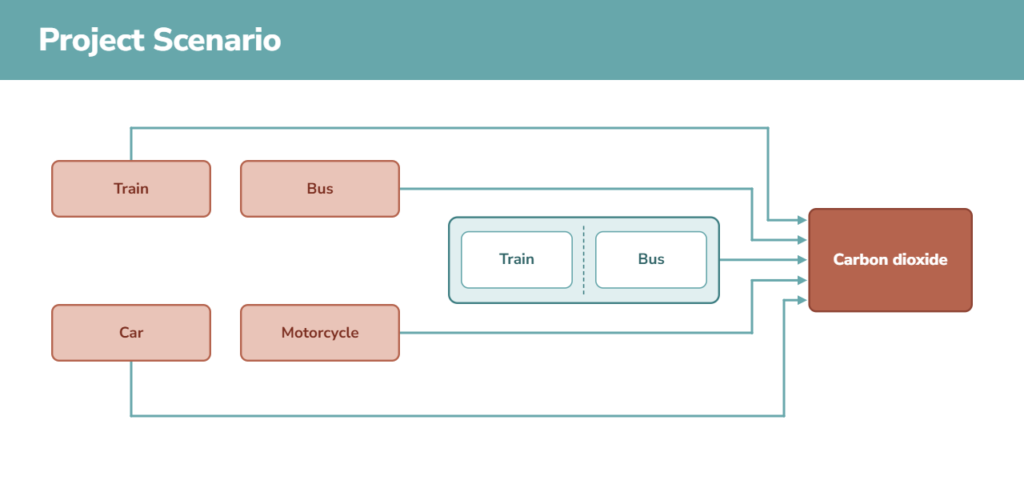
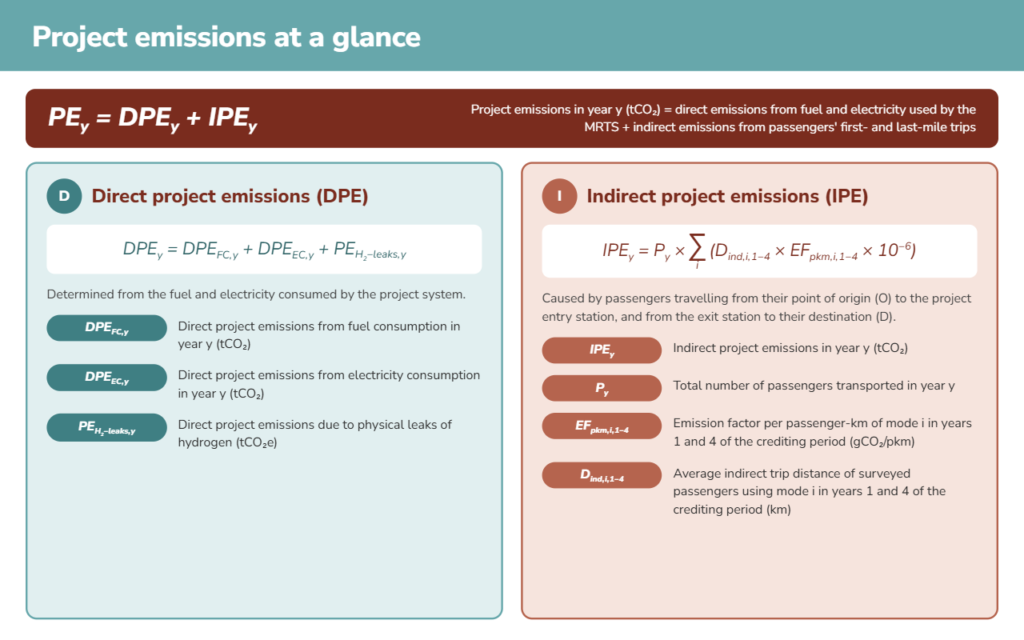
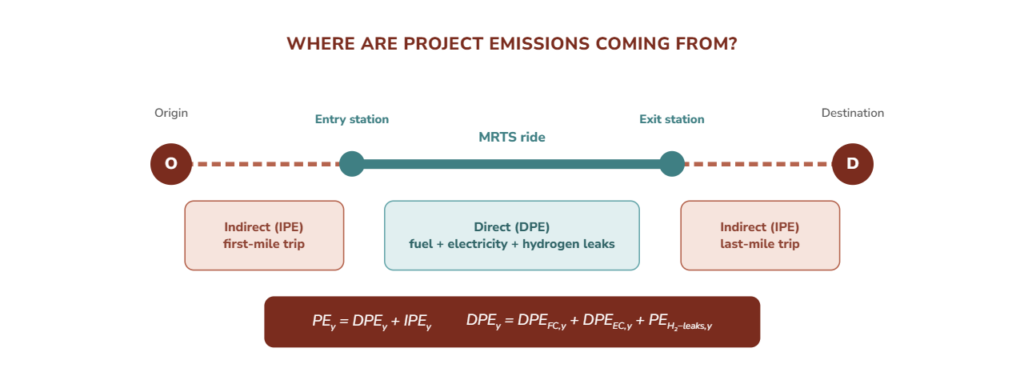
Project emissions go beyond the vehicles of the MRTS itself. They add the emissions from passengers’ trips from their origin to the entry station and from the exit station to their final destination.
Key data to monitor
| Parameter | What it captures | Unit |
| Py | Total number of passengers in year ‘y’ | Passengers |
| EFpkm,i,1-4 | Emission factor per passenger-km of mode i in years 1 and 4 of the crediting period y (gCO2/pkm) | tCO₂/pkm |
| DPEFC,y | Direct project emissions from fuel consumption in year ‘y’ | tCO₂ |
| DPEEC,y | Direct project emissions from electricity consumption in year ‘y’ | tCO₂ |
| SFCi,n,y | Specific fuel consumption of vehicle category ‘i’ using fuel type ‘n’ in year ‘y’ included in the sample | Mass or volume units of Fuel/km |
| DDPJ,n,y | Distance driven by project units using fuel type ‘n’ in year ‘y’ | km |
| Ni,1-4 | Number of vehicles category ‘i’ in years 1 and 4 of the crediting period | Number of vehicles |
| EFkm,i,1-4 | Emission factor per kilometer for vehicle category ‘i’ in years 1 and 4 of the crediting period (gCO2/km) | gCO2/km |
| OCi,t | Average occupancy of vehicle category ‘i’ in the period of time ‘t’ | Passengers |
4. Example: Yibin ART Line T4, China
This Verra-registered project (VCS 5438) established an autonomous rail transit system in Yibin, Sichuan, replacing part of conventional transport to improve urban mobility and reduce congestion and air pollution. It’s baseline is continued use of buses, cars, taxis, motorcycles and non-motorised transport, and GHG accounting covers CO₂, CH₄ and N₂O.
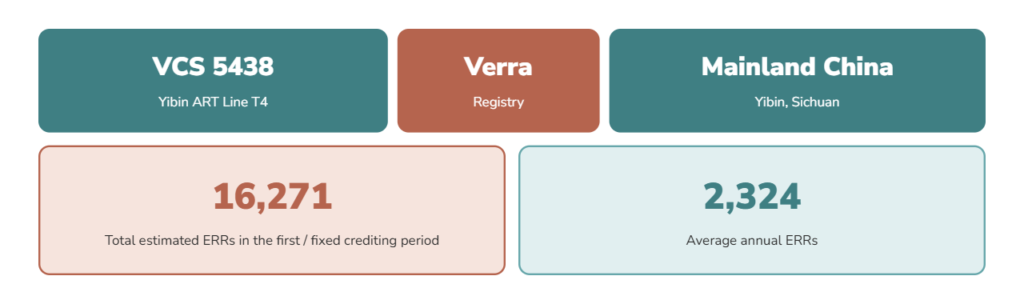
At the average annual rate, the total works out to roughly seven years of crediting. Autonomous-rail lines like this are explicitly listed as eligible measures in the new methodology.
Key takeaways
- Projects must replace mixed-traffic road routes with new or extended rail or segregated BRT.
- Upgrades to an existing MRTS, and lanes that replace an existing rail line, are not covered.
- Biofuel blends and hydrogen use come with strict conditions to keep credits credible.
- Savings equal baseline emissions of shifted passengers minus direct and first/last-mile project emissions.
What would it take to meet your Carbon Goals?
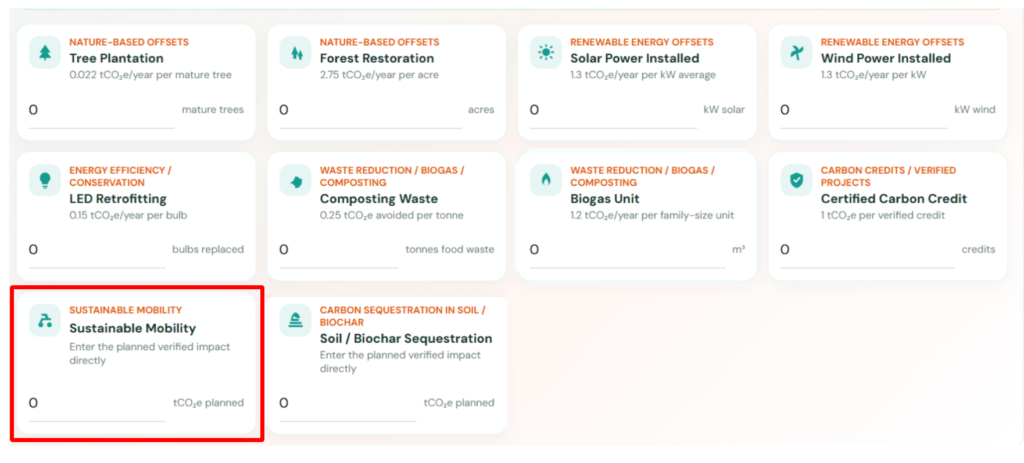
Measure your mobility footprint and offset it through sustainable transport projects. With our in-house carbon calculator , enter your planned impact under Sustainable Mobility and see your tCO₂e offsetting potential in seconds.
Measure your emissions. Understand your opportunities. Explore the right carbon pathway.