
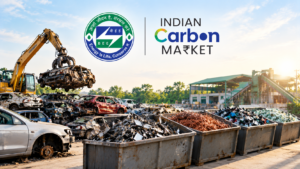

More vehicles on the road today mean more scrap tomorrow.
End-of-life vehicles (ELVs) are piling up in India: a fast-growing vehicle fleet means a fast-growing pile of scrap, and the Bureau of Energy Efficiency (BEE) has released a draft methodology that turns this challenge into a climate opportunity by rewarding formal, well-run scrapping facilities for the emissions they help avoid.
The Challenge: A Wave of End-of-Life Vehicles

The catch: according to NITI Aayog’s 2026 report, informal operators still handle a significant share of end-of-life vehicles. Without proper depollution and dismantling, this leads to:
• Contamination of soil and water
• Improper handling of batteries and refrigerants
• Disposal of automobile shredder residue
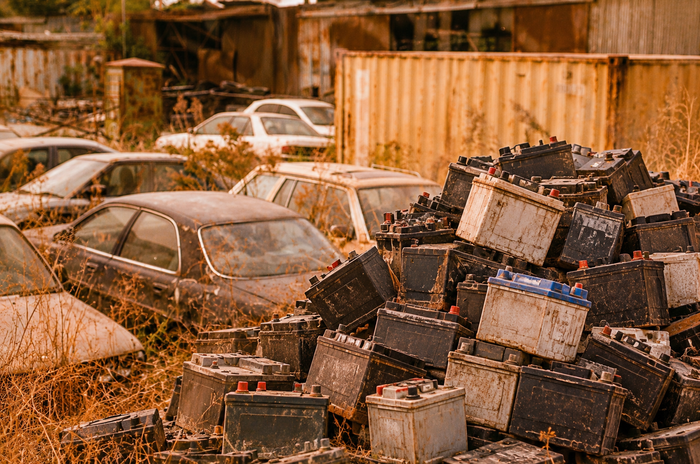
Without proper depollution, fluids and batteries can end up in soil and water.
The Idea: Reward Formal Recycling
The methodology aims to support the formalisation of ELV scrapping through Registered Vehicle Scrapping Facilities (RVSFs). It does this by incentivising higher recovery of metals, plastics and glass through environmentally sound processes, while cutting the greenhouse gas (GHG) emissions that come from producing virgin materials.
In One line
- Every tonne of material recovered from an end-of-life vehicle is a tonne that doesn’t need to be mined, smelted or manufactured from scratch, and the energy and emissions saved are counted as GHG emission avoidance.
Materials in focus:

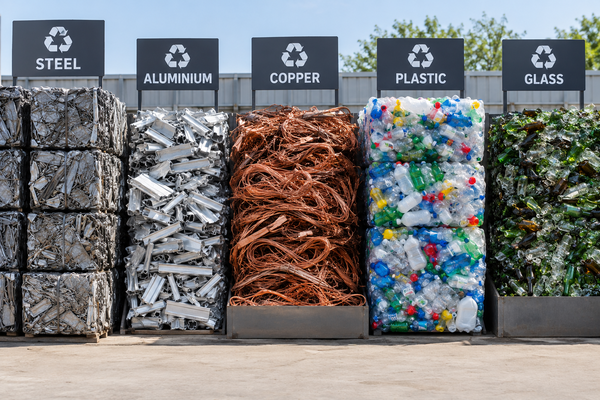
Steel, aluminium, copper, plastics and glass: the materials an ELV gives back.
These are recovered at RVSFs and processed into secondary raw materials, displacing virgin production and saving energy.
How It Works: The Project Scenario
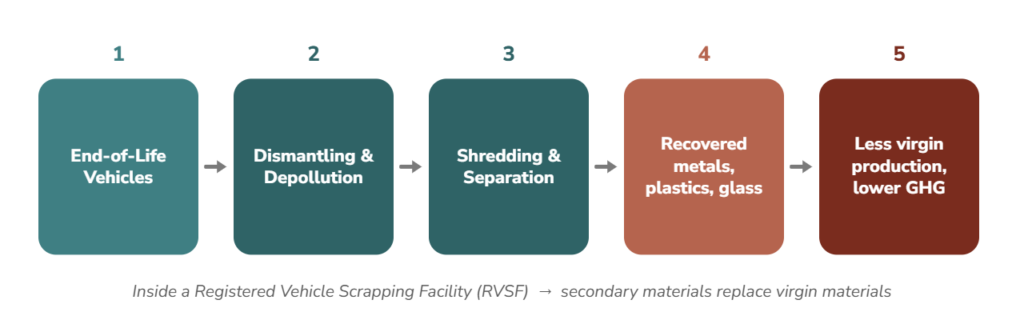
The project activity increases the recycling rate of end-of-life vehicle materials inside an RVSF. Here is the journey from end-of-life car to lower emissions:
Who Is Eligible?
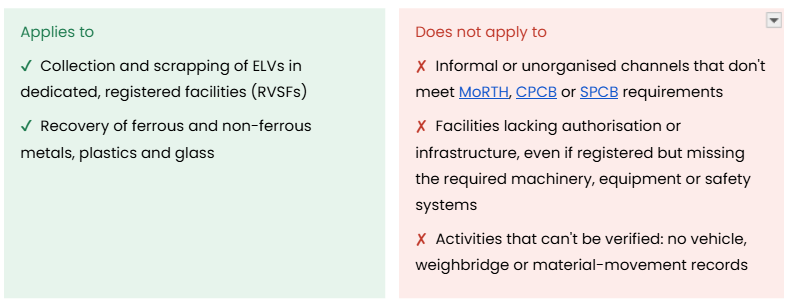
The methodology is deliberately strict about what counts, because credible carbon credits depend on credible data.
The Baseline: What Would Have Happened Anyway?
Carbon credits only make sense if we compare against a credible ‘no-project’ world. The methodology defines two baselines:
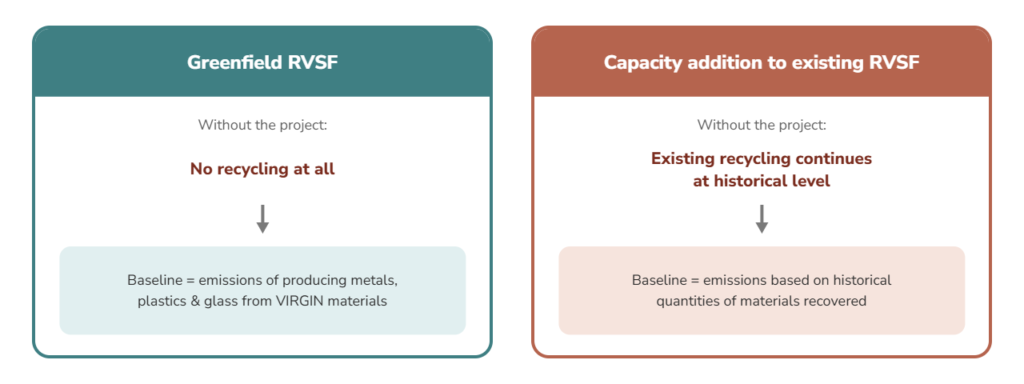
- Greenfield RVSF: Without the project, there would be no recycling, so materials would come from virgin production.
- Capacity addition: Without the project, the facility would keep operating at its historical recovery levels.
The Math: Calculating Emission Reductions
The calculation is refreshingly simple. Emission reductions in a period are the baseline emissions minus whatever the project itself emits (plus any leakage):
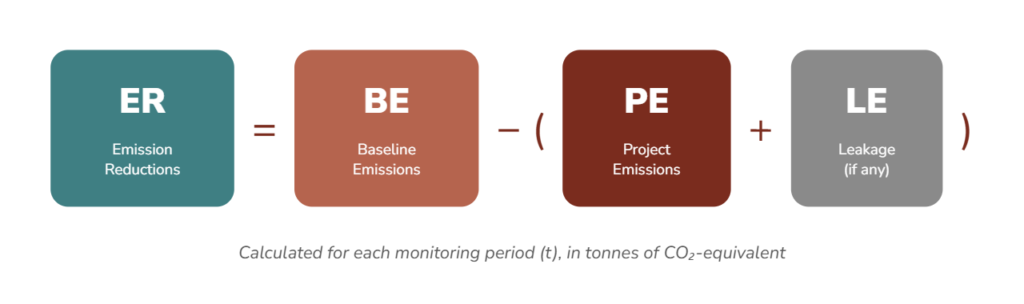
| Component | What does it mean? | How is it built up? |
| Baseline (BE) | Emissions in the absence of the project: producing the same materials from virgin sources | BEmetals + BEplastics + BEglass |
| Project (PE) | Emissions inside the project boundary, as monitored during operation | PE in the RVSF (sorting and processing) + PE in third-party processing facilities |
| Leakage (LE) | Unintended emissions increase outside the boundary caused by the project | Taken as zero, given the nature and scope of the activity |
Good to know: Since the project is simply about recycling more material at a registered facility, no leakage is expected. LE is set to zero, so ER = BE − PE.
Real-World Example: Project CDC-259
To show the approach in action, here is the Project CDC-259, registered under the Cercarbono standard using methodology CM-WM-ELV-01. It covers material recycling from ELVs exclusively at formal-sector RVSFs, and does not cover refurbishment of parts for reuse.
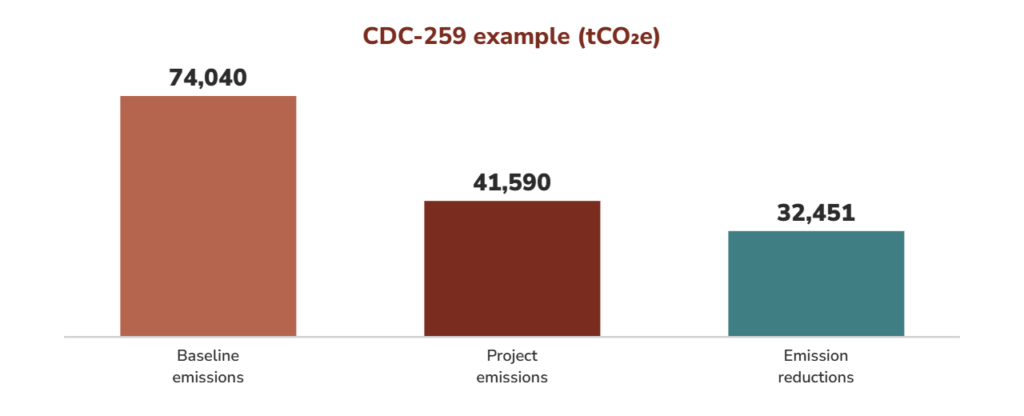
Proving ‘additionality’:
A carbon project must show it wouldn’t happen without carbon revenue. CDC-259 did this through a three-stage assessment (legal, barrier and financial), using CDM Tool 27 for investment analysis and Cercarbono’s additionality tool (v2.0.1):
• Legal: Setting up RVSFs is not mandated under the applicable regulatory framework.
• Barriers: Formal ELV recycling faces technological, regulatory, market and social hurdles.
• Financial: Returns are well below benchmark without carbon income.
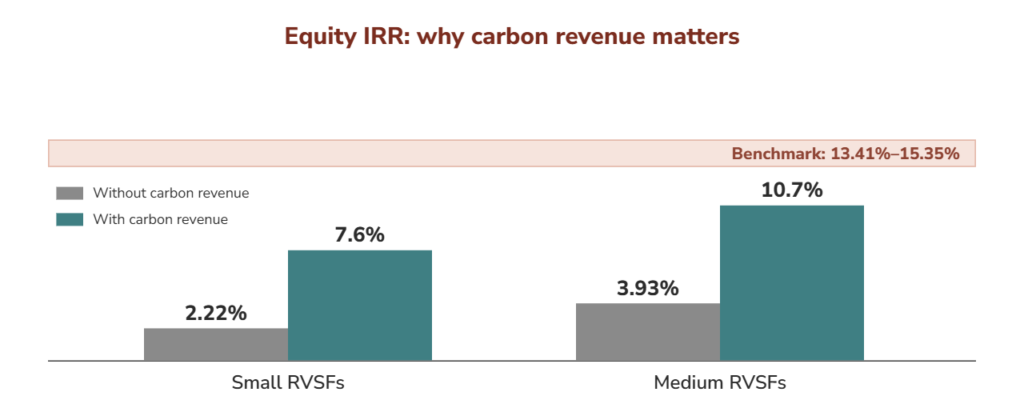
Carbon revenue lifts returns substantially, showing how it can tip the balance and help formal facilities become viable.
Key takeaways
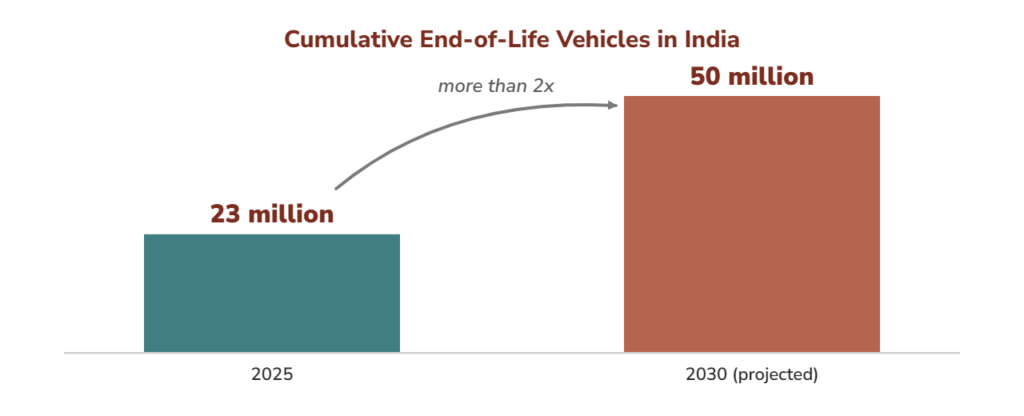
- ELVs in India could double to about 50 million by 2030, so formal recycling capacity is urgent.
- The methodology rewards verified recovery of metals, plastics and glass at registered facilities.
- Emission reductions = baseline emissions − project emissions (leakage assumed zero).
- Only formal, authorised, well-documented facilities qualify, so data quality is non-negotiable.
- Carbon revenue can make formal ELV recycling financially viable, as the CDC-259 example shows.
What would it take to meet your Carbon Goals?
Estimate the value of your emission reductions.
Verified recovery of metals, plastics and glass at a registered facility translates into measurable tCO₂e, and each verified tonne can be issued as one carbon credit. With our in-house carbon calculator , enter your planned impact under your facility and see your tCO₂e offsetting potential in seconds.
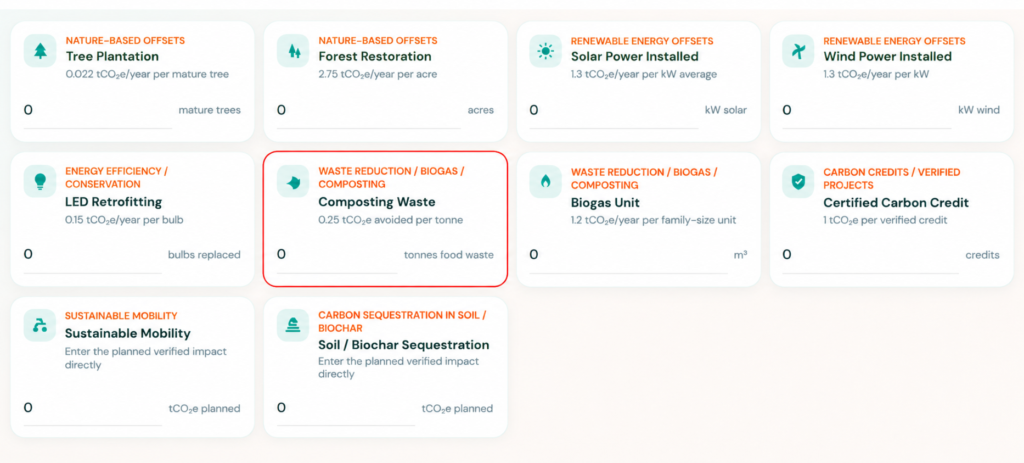
Measure your emissions. Understand your opportunities. Explore the right carbon pathway.